Sierra Leone Expands Biometric Passport Services to Makeni Revolutionizing Accessibility for Applicants
- The Salone Standard
- May 19
- 5 min read

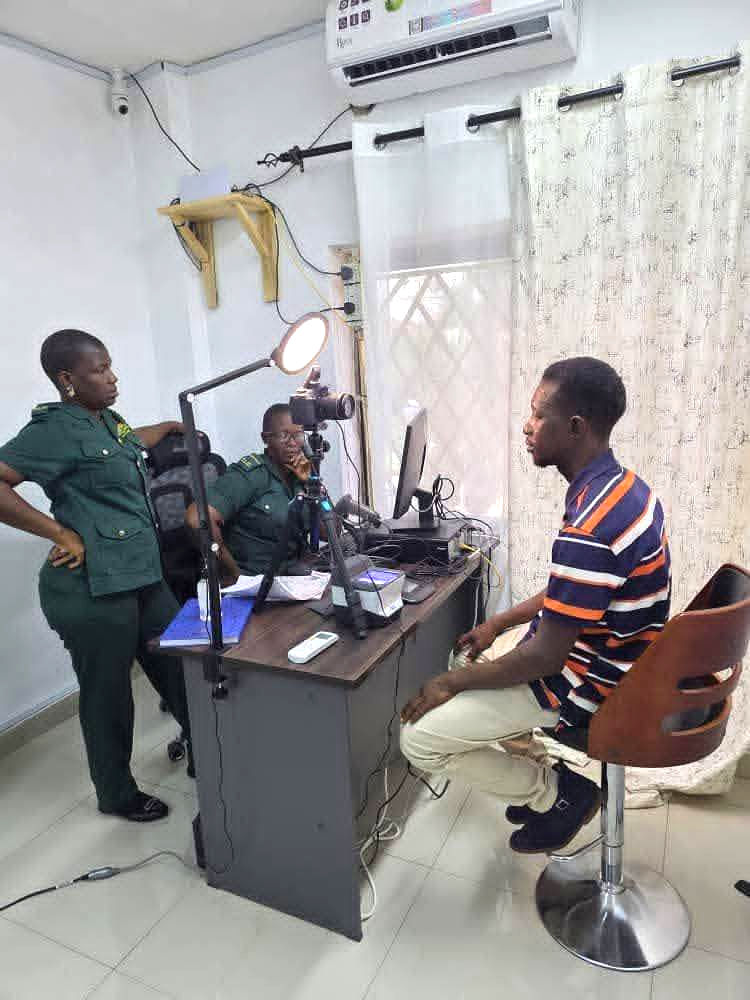
For decades, getting a passport in Sierra Leone meant one thing: a trip to Freetown. No matter where you lived, Bombali, Kono, or the rural fringes of the North East, you had to make the journey to the capital, navigate long queues, and spend money on transport and accommodation that many families simply could not afford. That reality changed on May 18, 2026, when the Government of Sierra Leone opened the North East Regional Passport and Unified Permit Centre in Makeni, a historic first that signals a new era for how the country delivers identity and travel documents to its citizens.
A Historic First for Makeni and the North East
The launch of the Makeni centre is not a minor administrative update. It is the first time in Sierra Leone's history that full biometric passport capturing has been made available outside of Freetown in the North East Region. The facility, inaugurated by Minister of Internal Affairs Morie Lengor and Chief Immigration Officer Dr. Moses Tiffa Baio, offers residents access to services that previously required a costly and time-consuming trip to the capital.
For citizens in Bombali District and surrounding areas, this is transformational. A single trip to Freetown, accounting for transport, food, and often an overnight stay, could easily cost the equivalent of several days' wages. For many, that cost was simply a barrier they could not overcome. The Makeni centre removes that barrier entirely.
What Services Are Available at the Makeni Centre
The North East Regional Passport and Unified Permit Centre is a full-service facility, not a limited satellite office. It handles:
First-time biometric passport applications - Citizens applying for a passport for the first time can complete the entire process locally, including biometric data capture.
Passport renewals - Existing passport holders can renew their documents without leaving the region.
Unified Permit System processing - Foreign residents, workers, and investors in the North East can apply for and renew biometric residence and work permit cards at the same location.
National Identity Card services - Integrated with the National Civil Registration Authority (NCRA), the centre also links applications to citizens' National Identification Numbers (NIN), now a mandatory requirement for passport issuance.
The digital infrastructure powering the centre was built in partnership with Constrat Systems (SL) Limited, which developed and manages the biometric capturing platform and the Unified Permit System used at the facility.
Years in the Making: The Road to Decentralization
The opening of the Makeni centre did not happen overnight. It was the result of years of planning, public pressure, and a clear policy direction from the Sierra Leone Immigration Department (SLID).
In March 2024, Chief Immigration Officer Alusine Kanneh publicly announced plans to reactivate regional post offices operated by Sierra Leone Postal Services (SALPOST) as passport application and collection points in Bo, Kenema, and Makeni. By November 2024, SLID confirmed that passport processing would be available in Bombali (Makeni) before the end of that year. In January 2025, the department confirmed new offices in Makeni and Kenema were preparing to open, with NIN integration built into the application process from day one.
That groundwork made May 2026's formal launch possible, and the momentum has not slowed.
More Districts Are Next: A National Rollout Underway
Makeni is not the end of the story. It is the beginning of a national decentralization effort that is already taking shape across Sierra Leone. Regional passport and permit centres are now operational in multiple locations:
Bo
Southern Region headquarters, serving citizens across the south of the country.
Kenema
Eastern Region headquarters, bringing services closer to communities in the east.
Kono & Port Loko
Additional offices handling applications and document verifications for surrounding districts.
Beyond national borders, plans are also in progress to establish processing offices in London, United Kingdom and Washington D.C., USA, giving Sierra Leone's large diaspora communities the ability to apply for or renew passports without flying home.
Faster Processing, Lower Costs
The benefits go beyond geography. SLID reports that the combined effect of decentralization and digital integration has reduced standard passport processing times to approximately two weeks, a significant improvement on the months-long waits that were once common.
The official cost remains $100, converted to Leones at the prevailing rate. What changes is the true cost to the applicant: when you no longer need to travel to Freetown, book accommodation, and take days off work, the actual financial burden of getting a passport drops considerably, especially for citizens in rural and semi-urban areas.
Why This Matters Beyond the Passport Office
Access to a passport is not just about travel. It is about opportunity. A passport opens doors to education abroad, business partnerships, medical care, and family reunification. When passport services are concentrated in one city, citizens in other parts of the country are effectively denied equal access to those opportunities. Decentralization is, at its core, a matter of equity.
It also carries practical economic benefits. Reduced congestion at the Freetown office means faster service for everyone. Regional offices create local employment. And when citizens spend less on transport and accommodation for government services, that money stays in local communities.
The broader context matters too. Sierra Leone's government has made public sector modernization a stated priority, and the passport expansion is one of the most visible examples of that commitment delivering real results for ordinary citizens. Integrating National Identification Numbers into the process also strengthens the country's civil registration infrastructure, an investment with long-term benefits for governance, social services, and national security.
What Applicants in Makeni Need to Know
If you are based in the North East and planning to apply for or renew your passport, here is what to prepare before visiting the Makeni centre:
National Identification Number (NIN) - A NIN is now mandatory for all biometric passport applications. If you do not yet have one, register with the National Civil Registration Authority before your visit.
Supporting documents - Bring your birth certificate, any previous passport, and proof of residence as applicable.
Application fee - The current fee is $100, payable in Leones. Confirm the current exchange rate with the office directly.
Processing time - Allow approximately two weeks for processing after biometric capture is completed.
For the most up-to-date information on required documents and office hours, visit the Sierra Leone Immigration Department's official website at slid.gov.sl.
A Step Toward a More Connected Sierra Leone
The opening of the North East Regional Passport and Unified Permit Centre in Makeni is more than a government milestone. It is proof that meaningful public service reform is possible and that geography should never determine whether a citizen can access their rights.
With centres now active in Makeni, Bo, Kenema, Port Loko, and Kono, and plans extending to the diaspora in the UK and US, Sierra Leone is building the infrastructure for a more connected, more equitable country. The citizens of Makeni were the first in the North East to benefit. Many more districts are on the way.
The standard Sierra Leone deserves has always existed within its people.
This platform exists to make it visible.
Do you have a story from life outside Freetown? The Salone Standard wants to hear from you. All submissions are confidential. Write to us at thesalonestandard@gmail.com
THE SALONE STANDARD • THESALONESTANDARD.COM
Sierra Leone's independent platform for honest advocacy, real stories, and constructive change.


Comments